
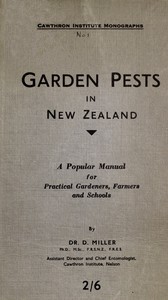
Garden Pests in New Zealand by David Miller
Published in 1956, Garden Pests in New Zealand is exactly what its title promises. David Miller, a respected entomologist and illustrator, created a practical guide for the home gardener. He systematically goes through the common insects, mollusks, and other creatures that munch on cabbages and roses. Each entry describes the pest, its life cycle, and the damage it causes, followed by the control methods available at the time—which often involved arsenical sprays and lead arsenate, a stark reminder of how gardening practices have changed.
The Story
There's no traditional narrative. Instead, the 'story' is the seasonal cycle of the garden itself. Miller acts as your guide through this miniature world. He starts with soil-dwelling grubs, moves to leaf-eating caterpillars and beetles, and finally to the sucking insects like scale and aphids. The book is a journey of identification and, in the context of the 1950s, eradication. The plot, such as it is, is the gardener's eternal struggle to protect their plants, framed by the scientific knowledge and tools of the post-war era.
Why You Should Read It
This book captivated me not for its gardening advice (which is largely outdated), but for its atmosphere. Miller's own detailed illustrations bring these 'villains' to life with surprising beauty. You feel his respect for them, even as he explains how to defeat them. Reading it is a deeply nostalgic experience. It captures a moment when gardening was a primary hobby, chemical controls were seen as modern miracles, and a government scientist would write a book for the everyday person. It’s a snapshot of a quieter, more hands-on relationship with the land, before the big box garden center existed.
Final Verdict
This isn't a book for someone looking for modern organic gardening tips. It's a niche read, but a wonderful one. It's perfect for history buffs interested in mid-century life, for gardeners curious about how their grandparents dealt with bugs, or for anyone who appreciates old, lovingly crafted reference books. Think of it as a historical document and a piece of folk art, bound together. You'll come away with a new appreciation for both the humble cabbage white butterfly and the passionate mind that studied it.
Christopher Scott
1 year agoThe formatting on this digital edition is flawless.
Joseph Anderson
1 year agoAfter finishing this book, the arguments are well-supported by credible references. I will read more from this author.
John Moore
1 year agoI didn't expect much, but the pacing is just right, keeping you engaged. Exactly what I needed.






Emma Hernandez
1 month agoComprehensive and well-researched.