
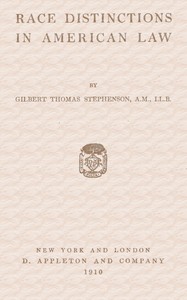
Race Distinctions in American Law by Gilbert Thomas Stephenson
Published in 1910, Gilbert Thomas Stephenson's book is a systematic survey. It doesn't tell a story with a beginning, middle, and end. Instead, it presents a snapshot of the American legal landscape at a specific point in time. Stephenson, a sociologist, acts like a meticulous archivist. He goes through different areas of life—like getting married, owning a home, voting, going to school, and using public transportation—and lists the specific laws that treated Black Americans, and sometimes other racial groups, differently from white citizens.
The Story
There isn't a plot in the traditional sense. The 'story' is the structure of inequality itself. Stephenson organizes his research by category. One chapter might detail which states banned marriage between white and Black people. The next might list which states had separate schools written right into their constitution. He shows how these distinctions weren't random or informal; they were embedded in the official codes and statutes of dozens of states. The book reads like a reference manual for legal segregation, showing its shocking breadth and normalization.
Why You Should Read It
This book is powerful because of its calm, factual tone. Stephenson isn't giving a fiery speech. He's showing you the receipts. That makes it hit harder. You see the sheer number of laws designed to control and separate people. It moves the discussion from 'was there racism?' to 'here is exactly how it was built into the system.' It helps you understand that Jim Crow wasn't just a few bad signs; it was a complex legal architecture. Reading it today, you can trace the direct line from these 1910 laws to many modern debates about voting rights, housing, and education.
Final Verdict
This isn't a beach read. It's for the curious reader who wants primary source material. It's perfect for history buffs, law students, or anyone who wants to move beyond summaries and see the raw machinery of institutional racism. If you've read novels or general histories about the era, this book provides the hard, factual backbone to those stories. Be prepared for a dry, legalistic style, but if you stick with it, you'll gain a much clearer, and more unsettling, picture of American history.
Melissa Lewis
6 months agoGreat digital experience compared to other versions.
Michelle Miller
8 months agoRecommended.
Elijah Lee
1 year agoI was skeptical at first, but the emotional weight of the story is balanced perfectly. I learned so much from this.
Dorothy Jones
1 year agoI started reading out of curiosity and the depth of research presented here is truly commendable. A valuable addition to my collection.








Christopher Lopez
1 month agoTo be perfectly clear, the clarity of the writing makes this accessible. Exactly what I needed.