
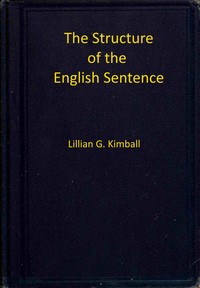
The structure of the English sentence by Lillian Kimball Stewart
Let's be honest, a book titled The Structure of the English Sentence doesn't scream 'page-turner.' But trust me, this 1904 guide by Lillian Kimball Stewart is a quiet little gem. It's not a story in the traditional sense. Instead, the 'plot' is the logical unfolding of how our language is built, piece by piece.
The Story
Stewart starts with the absolute basics: what is a sentence? From there, she introduces the core cast—the Subject and the Predicate—and shows how they are the non-negotiable foundation. The book then methodically introduces every other 'character': nouns, pronouns, verbs, adjectives, and adverbs, explaining the specific role each one plays. The real action is in the diagrams and examples. She shows you, step-by-step, how to break down a complex sentence into its components, revealing the hierarchy and relationships between words. It’s a systematic tour from simple statements to complicated clauses, all with the goal of making the underlying order visible and understandable.
Why You Should Read It
I picked this up expecting a dusty old textbook, but Stewart's voice is clear, patient, and practical. There's no pretension here. She wrote this for teachers and students, and that straightforward, helpful tone really comes through. Reading it feels like having a smart, organized friend explain the blueprint of a house you've lived in your whole life. You suddenly notice the load-bearing walls and the plumbing. It demystifies grammar in a way that feels empowering, not restrictive. For writers, it's a masterclass in sentence craft. For anyone who just loves language, it’s a fascinating look under the hood.
Final Verdict
This book is perfect for curious writers, editors, English language learners, or anyone who has ever wondered, 'Wait, why is that grammatically correct?' It's not for someone looking for a light narrative; it's an engaging technical manual for thought. If you enjoy understanding how things work, and you use English every single day, this short book offers a profoundly satisfying look at its inner workings. Think of it as the owner's manual for your own voice.
Donna Jones
1 year agoI didn't expect much, but the storytelling feels authentic and emotionally grounded. Absolutely essential reading.
Logan King
1 year agoSurprisingly enough, it creates a vivid world that you simply do not want to leave. A valuable addition to my collection.
John Flores
7 months agoVery interesting perspective.
Anthony Clark
7 months agoHonestly, the narrative structure is incredibly compelling. A valuable addition to my collection.









Paul Perez
1 year agoI came across this while browsing and it provides a comprehensive overview perfect for everyone. Exceeded all my expectations.